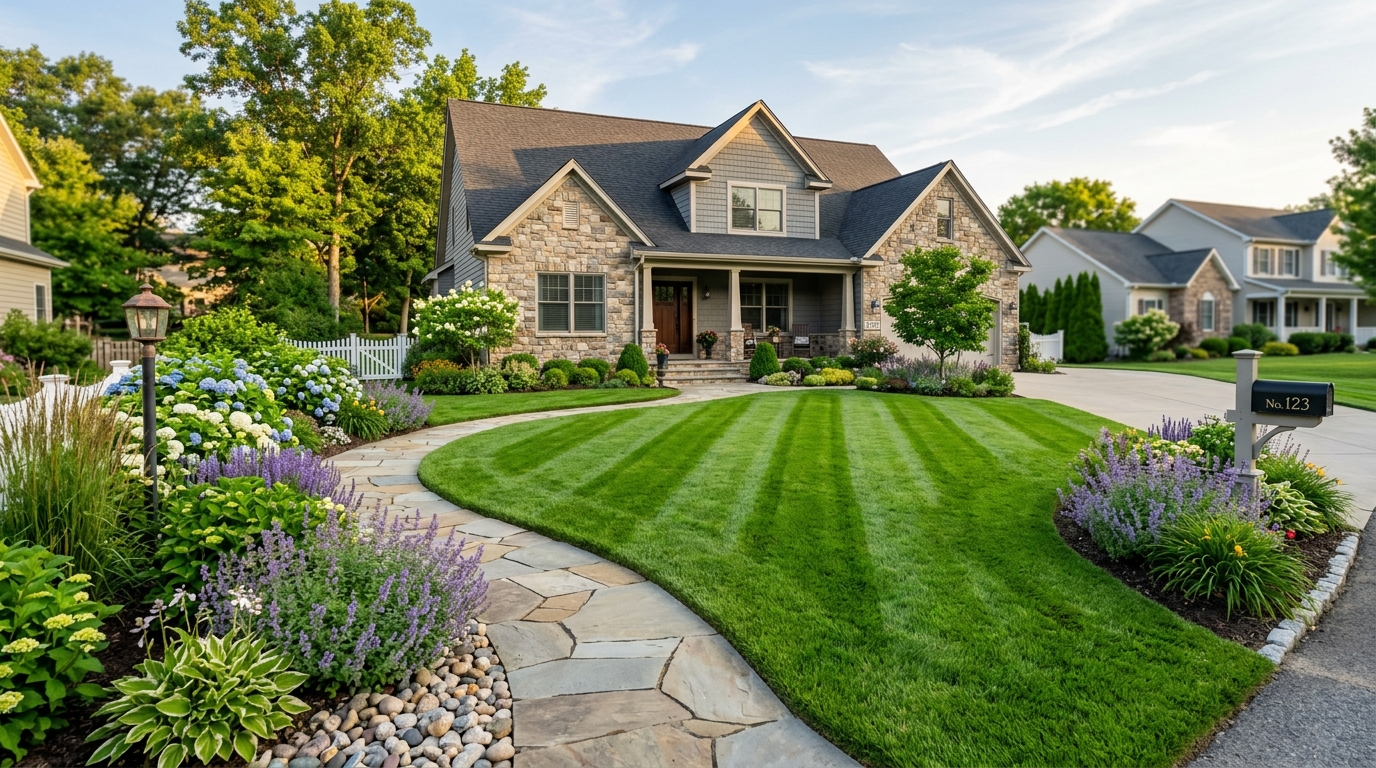
Bermudagrass vs St. Augustine Grass Identification
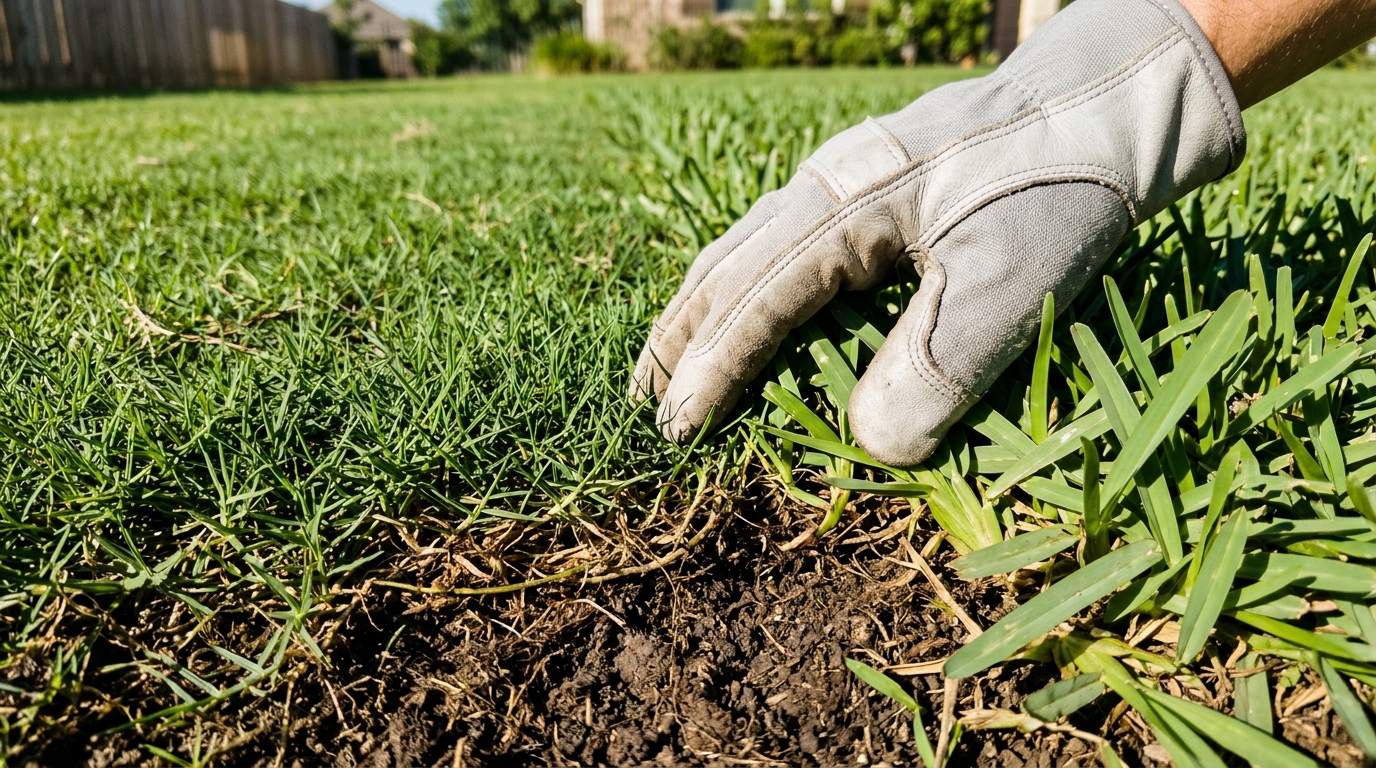 A close look at bermudagrass next to St. Augustine reveals striking differences in blade width and density.
Spotting bermudagrass vs st. augustine starts by checking sunlight levels and leaf width in your yard. Bermudagrass needs full sun all day, while St. Augustine grows well in tree shade. As a result, your yard trees help decide which grass can survive.
Many southern homeowners find both grasses growing side by side along fences and driveways. However, cutting both grasses at the same blade height hurts turf health. Therefore, learning to tell them apart saves you time and costly yard repair.
Looking at leaf tips and runners clarifies bermudagrass vs st. augustine in just a few minutes. Also, matching grass types to your soil produces a thick, green lawn. Finally, proper mowing habits help your chosen grass choke out weeds all summer long.
Bermudagrass vs St. Augustine: Side-by-Side Overview
Comparing bermudagrass vs st. augustine begins with a close look at grass blade width. Bermudagrass has thin, wiry leaves that measure only one-eighth inch across. On the other hand, St. Augustine leaves are wide, flat, and feel coarse underfoot.
Plant stems also show clear differences above and below the ground. Bermudagrass spreads through underground roots as well as surface runners. Meanwhile, St. Augustine spreads only by thick runners that creep along the soil surface.
| FeatureBermudagrassSt. Augustine Grass | ||
| Blade Width | Fine (1.5 to 3 mm) | Coarse (4 to 10 mm) |
| Leaf Tip Shape | Sharply pointed tip | Rounded boat-shaped tip |
| Growth Habit | Stolons and deep rhizomes | Surface stolons only |
| Sun Requirement | Full sun (7+ hours daily) | Filtered shade (3-5 hours) |
| Mowing Height | 1.0 to 2.0 inches | 3.0 to 4.0 inches |
| Cold Tolerance | High (USDA Zones 7-10) | Low (USDA Zones 8b-11) |
Learning bermudagrass vs st. augustine traits explains why each grass handles weather stress differently. For example, bermudagrass roots go deep underground to survive cold winter days. Instead, exposed St. Augustine runners suffer damage when hard winter freezes hit the yard.
Leaf tips also give you a reliable clue when you check lawn patches. Bermudagrass leaves end in a sharp, pointed tip that feels crisp. In contrast, St. Augustine blades have a rounded tip shaped like the bow of a boat.
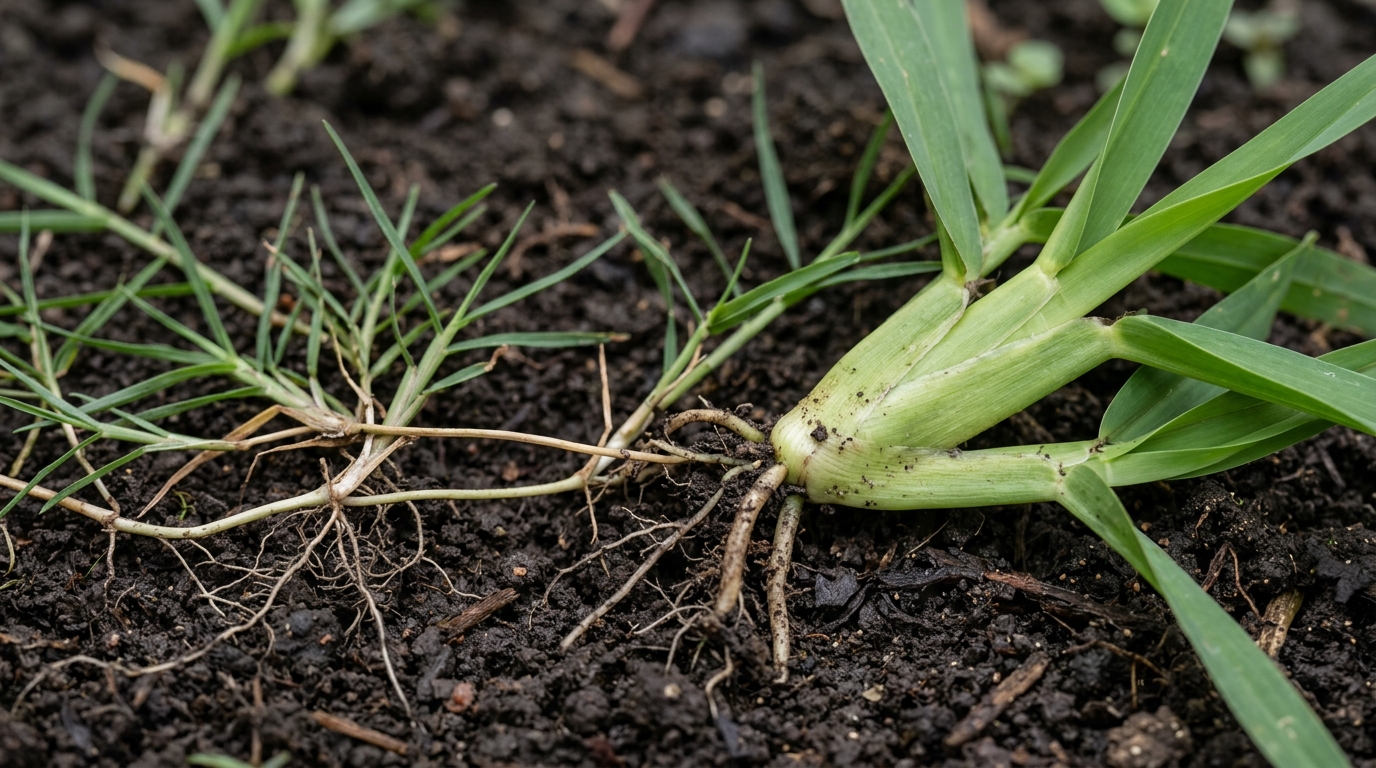 Examining leaf width and stolon structure gives an instant answer when identifying southern warm-season turf.
Grass color can also help you tell these warm-season grasses apart in summer. Bermudagrass often looks blue-green or gray-green in bright sun. Meanwhile, healthy St. Augustine shows a rich, deep emerald green across the entire lawn.
Looking at the base of the leaf blade reveals tiny botanical traits as well. Bermudagrass features a small collar with fine fringe hairs along the edge. In addition, St. Augustine stems feel distinctly flat and smooth when rolled between your fingers.
Key Differences in Performance, Cost, and Upkeep
Upkeep for bermudagrass vs st. augustine requires very different mower settings and feeding schedules. Bermudagrass grows fast in summer and needs mowing every five to seven days. Always follow the one-third mowing rule so you never cut off too much grass at once.
Lawn food needs also differ between these two popular southern grasses. Bermudagrass needs three to five pounds of nitrogen for each thousand square feet yearly. Meanwhile, St. Augustine needs only two to four pounds of nitrogen to stay lush.
Water needs set another clear line between bermudagrass vs st. augustine during dry weather spells. Both lawn grasses need one inch of deep watering each week during summer. Next, check EPA WaterSense guidelines to set up smart watering times that save money.
Yard planting costs also influence which grass best fits your home budget. You can plant common bermudagrass quickly from low-cost grass seed or sprigs. On the other hand, St. Augustine must be planted with sod rolls or live grass plugs.
Dead plant buildup also requires regular care from southern homeowners. Bermudagrass builds thick thatch fast when fed heavy nitrogen in warm months. Meanwhile, St. Augustine forms heavy runner mats that need aeration to let water soak in.
Pest resistance is another upkeep factor that southern lawn owners must monitor each season. Hungry grubs and armyworms love to feed on tender young bermudagrass root crowns. However, tiny southern chinch bugs target St. Augustine lawns and create large yellow patches.
When Bermudagrass Is the Better Fit for Your Yard
Homeowners choosing bermudagrass vs st. augustine should pick bermudagrass for wide open yards with full sun. Bermudagrass thrives in scorching summer heat and spreads fast across large open lots. In fact, running dogs and busy kids rarely harm this tough grass surface.
Recovery speed is another big win for this heat-loving lawn grass. When severe drought hits, bermudagrass goes brown to rest and protect its roots. Then, green leaves bounce back quickly once fresh rain or hose water returns.
Winter hardiness also matters when you compare bermudagrass vs st. augustine across the upper South. Bermudagrass handles hard winter freezes across USDA Zone 7 without dying off. Check the USDA Plant Hardiness Zone map before picking warm-season grass species for your home.
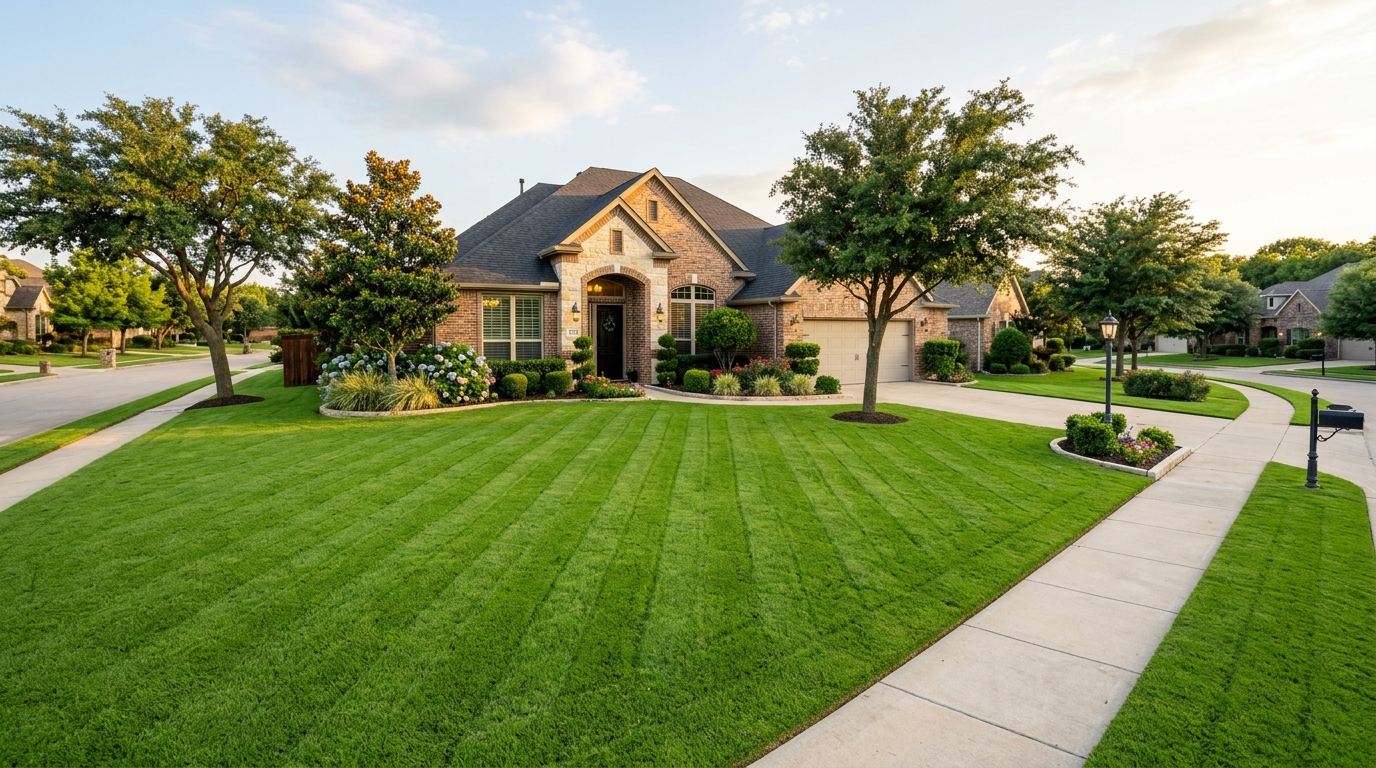 Bermudagrass forms an ultra-dense, carpet-like turf canopy when mowed low in open, sunny southern landscapes.
If you want a low, tight lawn like a golf fairway, bermudagrass wins easily. Special reel mowers let you cut this grass below one inch all summer. Therefore, lawn hobbyists love bermudagrass for its clean, striped look and dense carpet feel.
Deep root systems allow this tough grass to thrive in harsh clay soils. Long underground stems punch through hard soil layers to pull moisture from deep down. As a result, bermudagrass survives summer dry spells better than most surface-rooted turf varieties.
Keep Your Warm-Season Lawn on Track All Year
Download our free seasonal checklist to time fertilizing, mowing heights, and weed defense for your exact turf type.
Download the Free Seasonal Lawn Checklist
When St. Augustine Makes More Sense
Choosing bermudagrass vs st. augustine clearly favors St. Augustine when trees shade your yard. Bermudagrass thins out and dies when shaded by oak trees or tall fences. Instead, shade-tolerant St. Augustine types like Palmetto stay green with four hours of sun.
Homeowners who want a soft, thick lawn also love St. Augustine grass. Its wide leaves form a thick carpet that feels great under bare feet. Plus, it pairs nicely with nearby centipede grass care areas in humid coastal towns.
Mower habits also play a big part when picking bermudagrass vs st. augustine for your home. St. Augustine does best when cut high at three to four inches. As a result, you spend less time behind a mower during hot July weekends.
Natural weed defense is another great benefit of tall St. Augustine turf. A tall grass canopy shades the dirt and stops weed seeds from sprouting. Therefore, thick St. Augustine lawns keep out crabgrass with far less weed killer spray.
Ocean salt tolerance makes St. Augustine the top pick for coastal homes. Salty sea air burns bermudagrass leaves, but St. Augustine handles salt spray well. Consequently, beach towns from Florida to Texas rely heavily on St. Augustine turf.
Vibrant winter color retention also gives St. Augustine an edge in frost-free regions. While other warm grasses turn brown at the first cool night, St. Augustine stays green longer. So homeowners in south Florida enjoy an emerald lawn nearly all winter long.
Bermudagrass vs St. Augustine by Grass Type, Soil, and Yard Size
Soil type strongly affects how bermudagrass vs st. augustine grows across your property. Bermudagrass grows well in sandy dirt, heavy clay, or dry rocky soil. However, high-pH lime soils make St. Augustine leaves turn yellow from iron deficiency.
Yard size also shapes your planting budget and weekend yard care plans. Seeding a big lot with bermudagrass costs far less than sodding acres of St. Augustine. Grab our free printable seasonal lawn checklist to plan grass feeding by yard size.
Neighborhood looks also guide choices between bermudagrass vs st. augustine or other zoysia grass care styles. Fine bermudagrass matches golf courses and neat suburban front yards. Meanwhile, wide St. Augustine blades give a lush, tropical look common in warm southern towns.
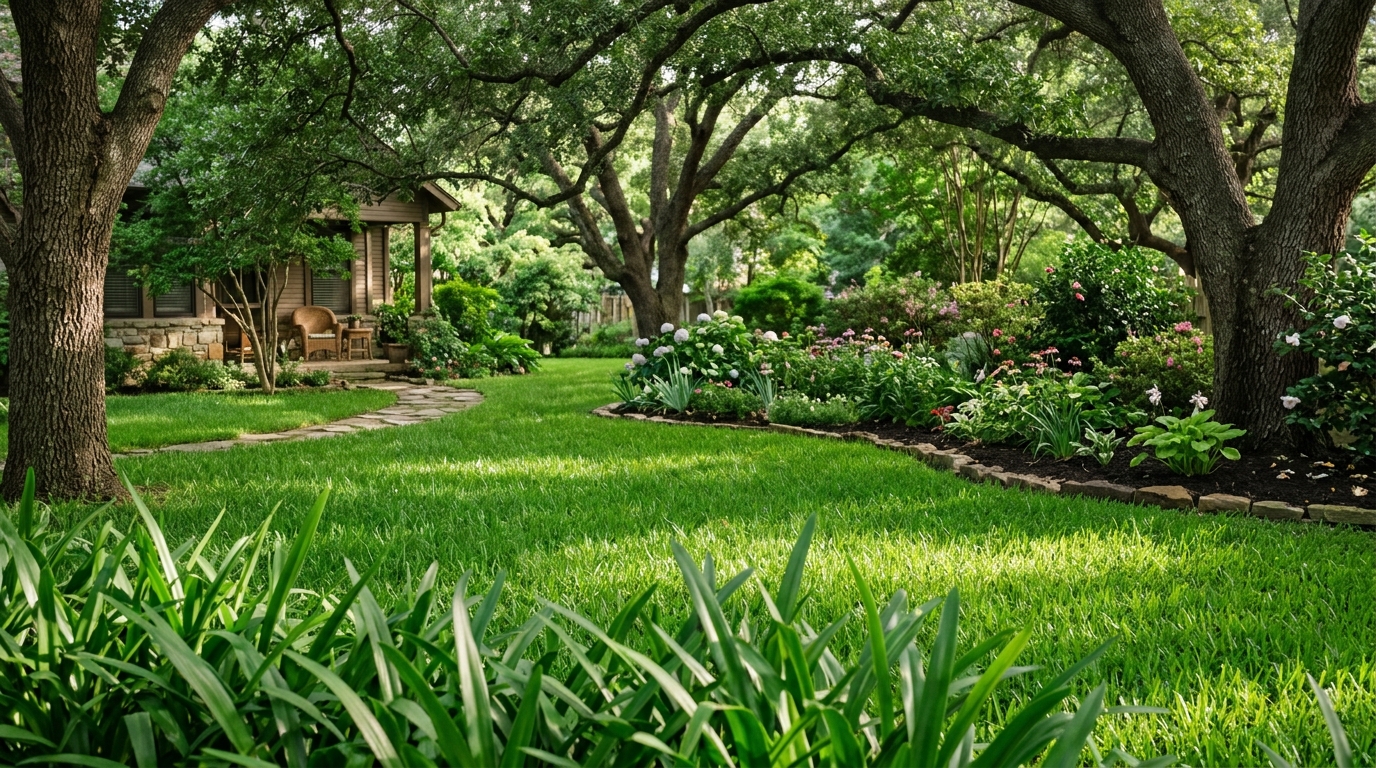 Broad-bladed St. Augustine turf maintains vibrant color and deep density beneath partial tree shade.
Root depth also shows how these two grasses survive dry summer weeks. Bermudagrass sends roots several feet deep to find underground water. Meanwhile, St. Augustine roots stay near the top, needing steady watering during summer heat.
Yard microclimates often let clever homeowners grow both grasses on one property. For example, a sunny front yard can grow bermudagrass while a shady backyard grows St. Augustine. Therefore, simple landscape edging can separate both grasses neatly without weed fights.
Property slope and rainwater drainage also determine how each lawn grass performs long term. Fast surface runners on St. Augustine hold loose topsoil tightly on gentle yard inclines. Plus, bermudagrass root nets lock sloping ground firmly in place to stop dirt runoff.
Common Mistakes Homeowners Make When Choosing
One common error when weighing bermudagrass vs st. augustine is ignoring tree shade. Planting bermudagrass under big trees makes it stretch, turn pale, and die. When fixing shady yards, choose to install fresh sod using shade-ready St. Augustine plugs instead.
Wrong mower heights also cause serious damage to warm-season home lawns. Cutting St. Augustine too short scalps grass crowns and invites weed growth. On the other hand, letting bermudagrass grow too tall creates thick brown stalks when cut.
Using the wrong weed killer harms both bermudagrass vs st. augustine during summer weed control. Common weed sprays made for bermudagrass can kill St. Augustine lawns in a day. Therefore, always read bottle labels before spraying any weed killer on your grass.
Giving your lawn too much water also causes fungus problems in warm turf. Wet soil leads to Large Patch fungus in St. Augustine and root rot in bermudagrass. Instead, water your yard deeply only once or twice a week when grass wilts.
Skipping regular soil tests also causes homeowners to waste money on lawn food. Spreading high nitrogen on alkaline soil locks up nutrients and hurts grass roots. Consequently, testing your soil every two years helps you pick the right lawn food.
Delaying fall weed defense is another costly mistake for warm-season grass owners. Applying pre-emergent weed controls when soil cools to seventy degrees stops winter weeds early. Then, clean turf wakes up strong and healthy when warm spring sunshine arrives.
Frequently Asked Questions
Can you mix bermudagrass and St. Augustine grass in the same lawn?
You should not intentionally mix bermudagrass vs st. augustine because their mowing heights clash badly. Bermudagrass needs short mowing at one to two inches, while St. Augustine needs three to four inches. As a result, one grass will scalp, weaken, and die off quickly.
Which grass handles foot traffic and pets better?
Bermudagrass withstands heavy foot traffic and pets much better because its deep roots recover fast. Meanwhile, running dogs crush St. Augustine surface runners, leaving bare dirt trails across your yard. Therefore, busy families should choose bermudagrass for high-traffic play areas every time.
How do you tell bermudagrass and St. Augustine apart in winter?
You can tell dormant bermudagrass vs st. augustine apart in winter by blade width and runner thickness. First, dormant bermudagrass turns light tan with thin, wiry mats hugging the soil surface. In fact, dormant St. Augustine shows thick, coarse brown surface runners with rounded tips.
Can you grow St. Augustine grass from seed?
No, viable commercial St. Augustine seed is not sold because grass flowers produce sterile seeds. Instead, homeowners must start St. Augustine yards by laying fresh sod rolls or planting live plugs. While sod costs more up front, it gives you an instant green lawn with fast root growth.
Final Verdict for Your Yard
First, check your lawn sunlight hours and soil type before buying new grass. If your yard gets full sun all day, tough bermudagrass delivers top durability. However, choose St. Augustine if mature trees or fences cast deep shade across your yard.
Next, match your mowing and feeding habits to the needs of your grass. Keep mower blades sharp and cut grass at the right height to protect root health. Also, test your soil every two years to keep turf roots growing strong and deep.
If you want simple lawn steps each season, grab our free printable lawn checklist today. Then, you can time your fertilizer and weed care with confidence. Following these easy steps ensures your bermudagrass vs st. augustine choice creates a lush, green yard.