What Is Lawn Thatch (And When Is It Dangerous?)
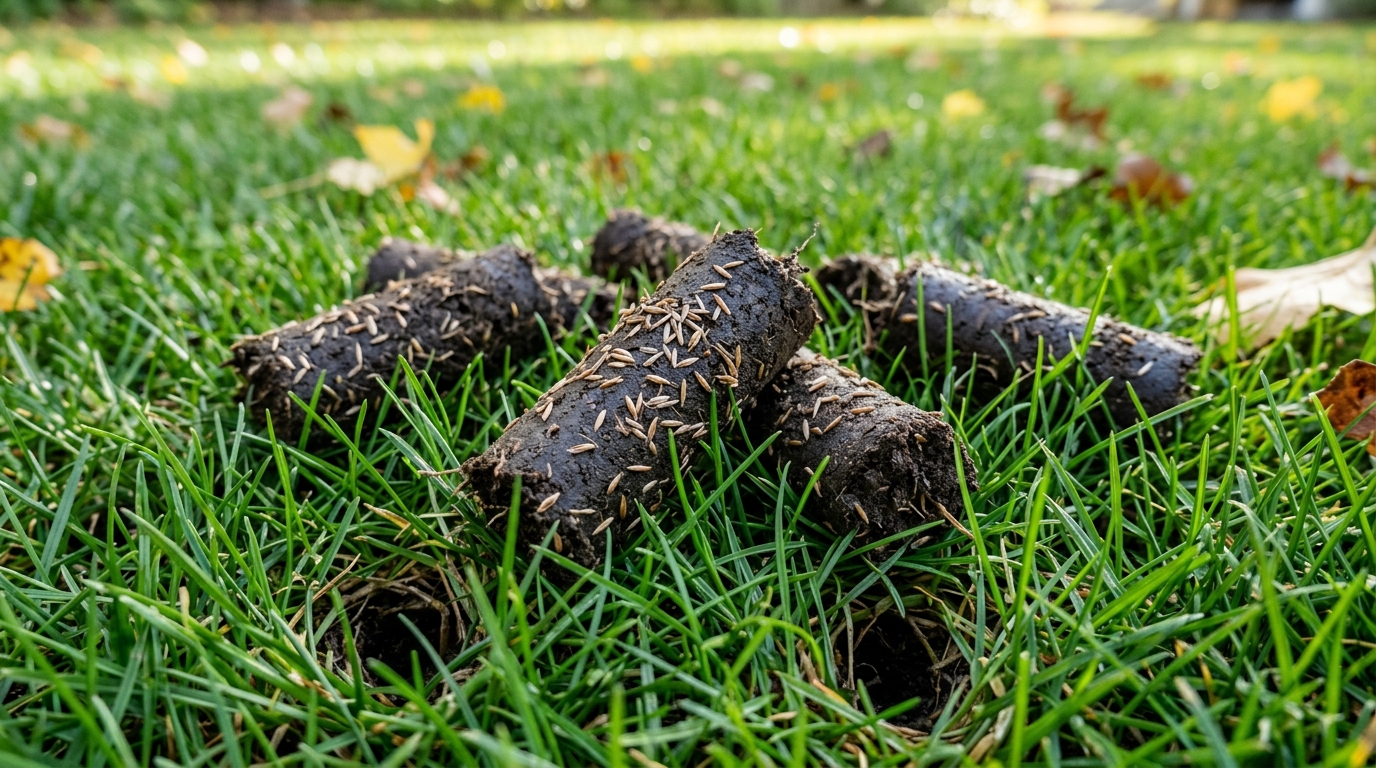
Thatch is a tightly interwoven layer of living and dead grass stems, crowns, stolons, and roots that accumulates between green vegetation and the soil surface. Contrary to popular belief, grass clippings do NOT contribute significantly to thatch because they consist of 85% water and decompose rapidly.
A thin thatch layer (under 0.5 inches) is beneficial: it insulates grass roots against extreme temperature swings and cushions the turf against heavy foot traffic. However, when thatch exceeds 0.75 inches, it acts like a spongy roof that absorbs water and fertilizer before moisture can reach soil roots.
How to Measure Your Thatch Depth
Use a garden spade or bulb planter to extract a 3-inch deep wedge of turf from your lawn. Inspect the cross-section between green grass leaves and dark soil. Measure the spongy brown organic band with a ruler.
Nature's Lawn Liquid Aerator & Soil Conditioner
Bio-active surfactant formula breaks up dense clay down to the subsoil without heavy mechanical aeration or torn sprinkler lines. Promotes 4x deeper root growth.
Mechanical Power Raking vs Scarifying
Use an electric dethatcher or commercial power rake fitted with flexible spring-steel tines. Set the height so the tines lightly graze the thatch layer without gouging deep into the soil bed.
- Best Timing for Cool-Season Grass: Early Autumn (September) or early Spring when grass has plenty of energy to heal.
- Best Timing for Warm-Season Grass: Late Spring (May-June) during peak stolon recovery and lateral expansion.