Understanding the Problem: Soil Compaction
Turfgrass roots do not grow in dirt—they grow in the microscopic pore spaces between soil particles. When heavy foot traffic, lawn mowers, and rainfall press soil particles together, these pores collapse. Compacted soil starves roots of oxygen, prevents water penetration, and creates a shallow root zone incapable of withstanding summer heat waves.
How Mechanical Core Aeration Works
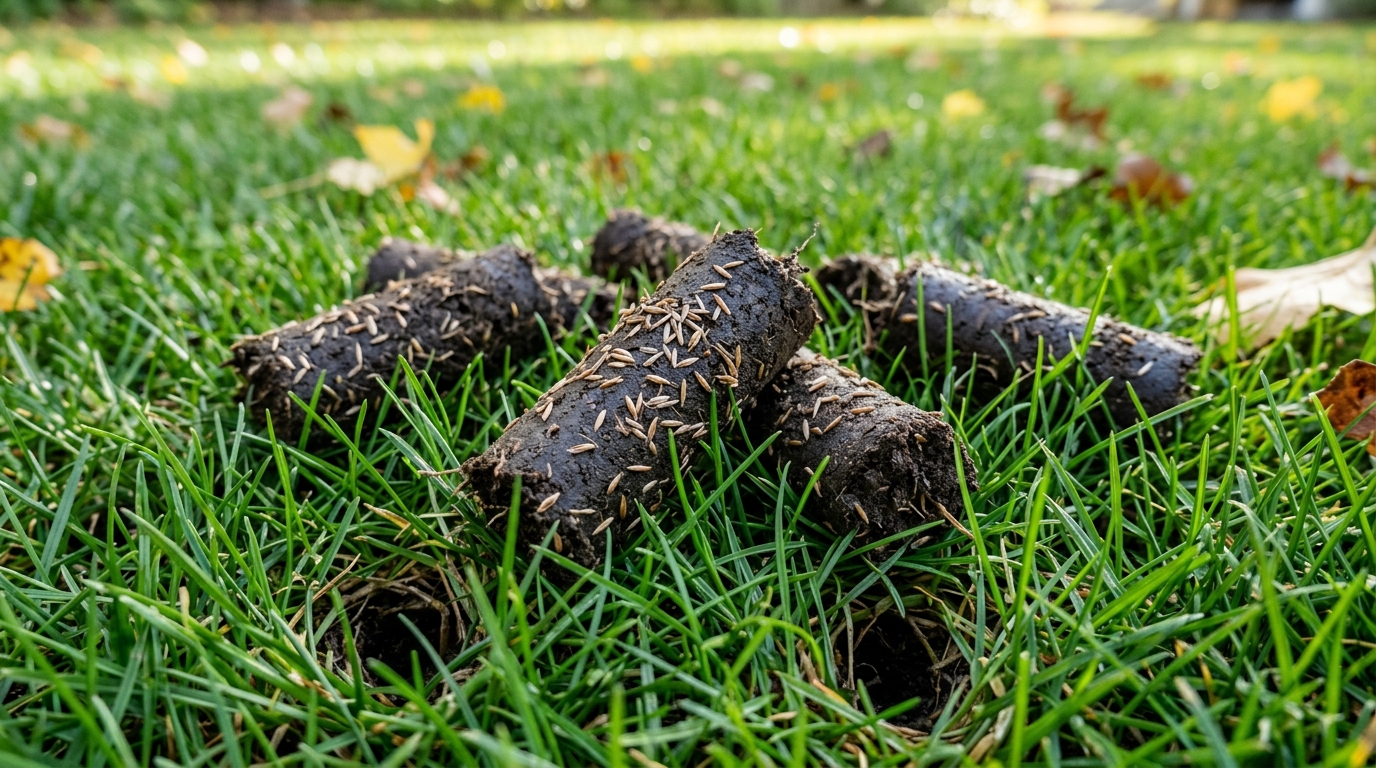
A motorized hollow-tine core aerator drives cylindrical metal spoons into the ground, pulling out thousands of 2-to-3-inch soil cores and depositing them across your lawn. This provides immediate physical relief from surface compaction and creates open channels for seed-to-soil contact. Turf agronomists strongly advise overseeding immediately after core aeration to maximize germination velocity.
- Advantages: Instant physical pore space creation; ideal for fall overseeding.
- Drawbacks: Heavy 250lb machine rental required; punctures shallow irrigation lines and invisible dog fence cables; leaves messy mud plugs on turf for 2 weeks.
Nature's Lawn Liquid Aerator & Soil Conditioner
Bio-active surfactant formula breaks up dense clay down to the subsoil without heavy mechanical aeration or torn sprinkler lines. Promotes 4x deeper root growth.
The Science Behind Liquid Aerators
Liquid aeration uses bio-active surfactants (typically ammonium laureth sulfate) combined with organic humic and fulvic acids. Surfactants decrease the surface tension of water, allowing moisture to penetrate tightly bonded clay platelets.
As the solution penetrates deeper into the subsoil, humates stimulate native soil microbes. The microbes digest bound minerals and excrete polysaccharide glues that reorganize microscopic clay particles into aggregated crumbs, creating long-term structural porosity down to 8–12 inches.
Verdict: Which Should You Choose?
If you are actively overseeding bare lawn spots in autumn, mechanical core aeration provides superior physical seed bed pockets. However, for ongoing seasonal maintenance without machine rentals or damaged sprinkler heads, liquid aeration offers deeper, uniform soil conditioning.