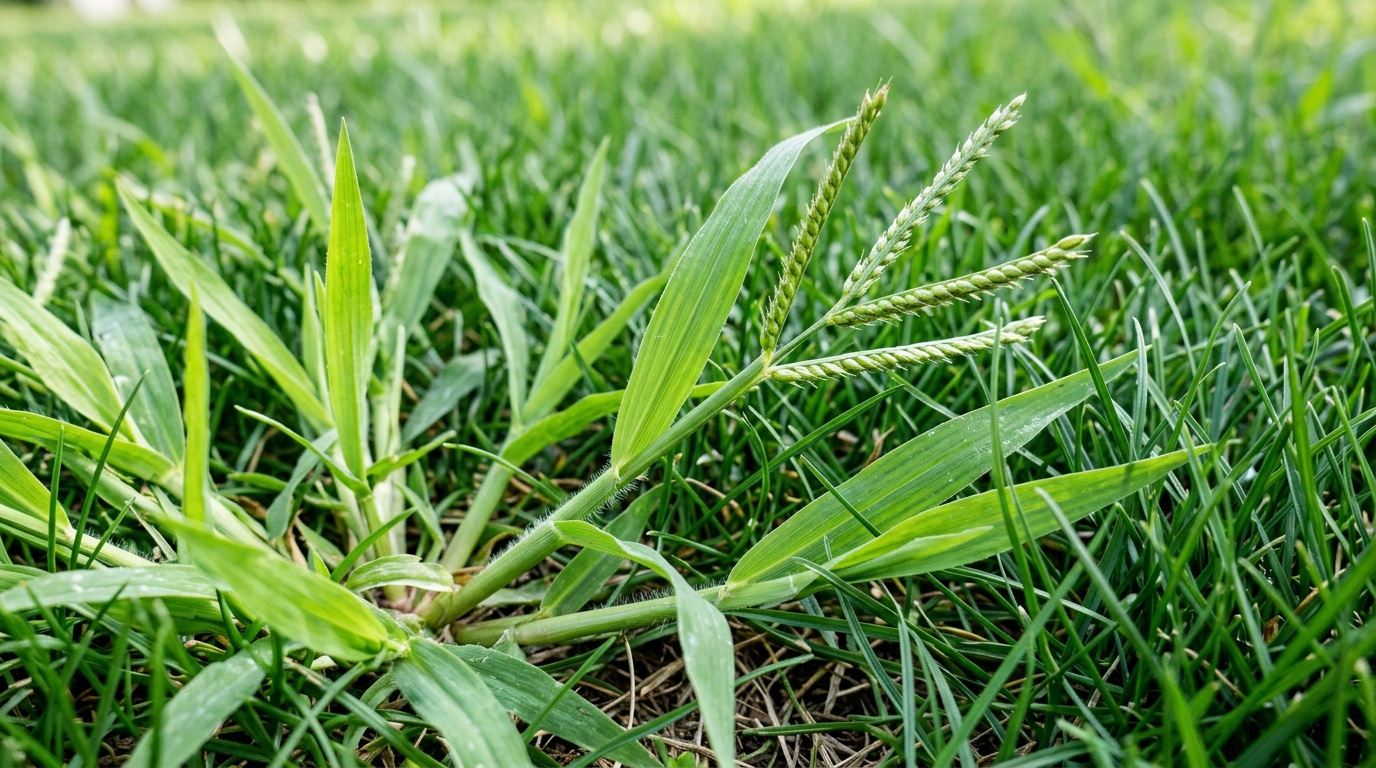
The Crabgrass Lifecycle and Why It Wins
Crabgrass (Digitaria) is an opportunistic warm-season annual grassy weed capable of producing up to 150,000 seeds per individual plant. These dormant seeds sit in your soil awaiting optimal temperature conditions. By tracking soil temperatures at a 2-inch depth, you will observe that when readings maintain a sustained 55°F for four consecutive days, the seed coat cracks and germination begins.
Step 1: Timing Your Spring Pre-Emergent Chemical Barrier
Attempting to fight mature crabgrass in mid-July is exhausting and expensive. The primary weapon of turfgrass agronomists is the application of a high-efficiency pre-emergent herbicide (such as Prodiamine or Dithiopyr) in late winter or early spring.
A reliable biological signpost is the blooming of yellow forsythia bushes in your neighborhood; when the yellow flowers begin to drop, crabgrass germination is imminent. Water the pre-emergent immediately with at least 0.5 inches of irrigation to bind the chemical vapor barrier into the top layer of soil.
Scotts Turf Builder Triple Action Starter Bundle
Feeds new grass seedlings, prevents crabgrass before it sprouts, and clears broadleaf weeds in a single uniform drop-spreader application.
Step 2: Selective Post-Emergent Spot Eradication
If early spring pre-emergents were skipped and you see light-green prostrate crabgrass clumps spreading across your turf, standard weed-and-feed products will no longer work. You must employ a selective post-emergent containing Quinclorac.
- Application Window: Spray early morning when ambient air temperature is between 65°F and 85°F. High heat (>90°F) causes severe chemical burn on desirable turf.
- Surfactant: Always mix a methylated seed oil (MSO) surfactant to dissolve the waxy cuticle coating on mature crabgrass blades.
Step 3: Cultural Turf Practices That Block Crabgrass Naturally
Chemicals treat the symptom, but thick turf cures the disease. A lawn mowed high (3.5 to 4 inches for Fescue and Bluegrass) casts deep shadows across the soil floor. Crabgrass seedlings require abundant direct sunlight to synthesize carbohydrates; dense shade starves them before they can develop tillers.